Introduction
Chronic Kidney Disease (CKD) is a growing global health problem, affecting an increasing number of patients and placing a significant burden on healthcare systems. Kidney function is commonly assessed by measuring creatinine levels, as creatinine concentration is directly related to the glomerular filtration rate (GFR). Current monitoring methods rely mainly on blood sampling, which is invasive and unsuitable for frequent or continuous measurements. Measuring creatinine in sweat offers a promising, non-invasive alternative that could enable frequent, wearable monitoring of kidney function and support early detection and management of CKD.
DXcrete
DXcrete is a spin-off company from the Microsystems group focused on the development of BEA, a platform which enables continuous and non-invasive biomarker monitoring in sweat. The BEA chip (Figure 1) is unique in that it can collect and analyze sweat at very low sweat rates, a capability that is essential for monitoring individuals during rest or normal daily activities. This is achieved by employing discretized microfluidics (also referred to as droplet microfluidics), as illustrated in Figure 2, rather than conventional continuous-flow microfluidic systems.[1]
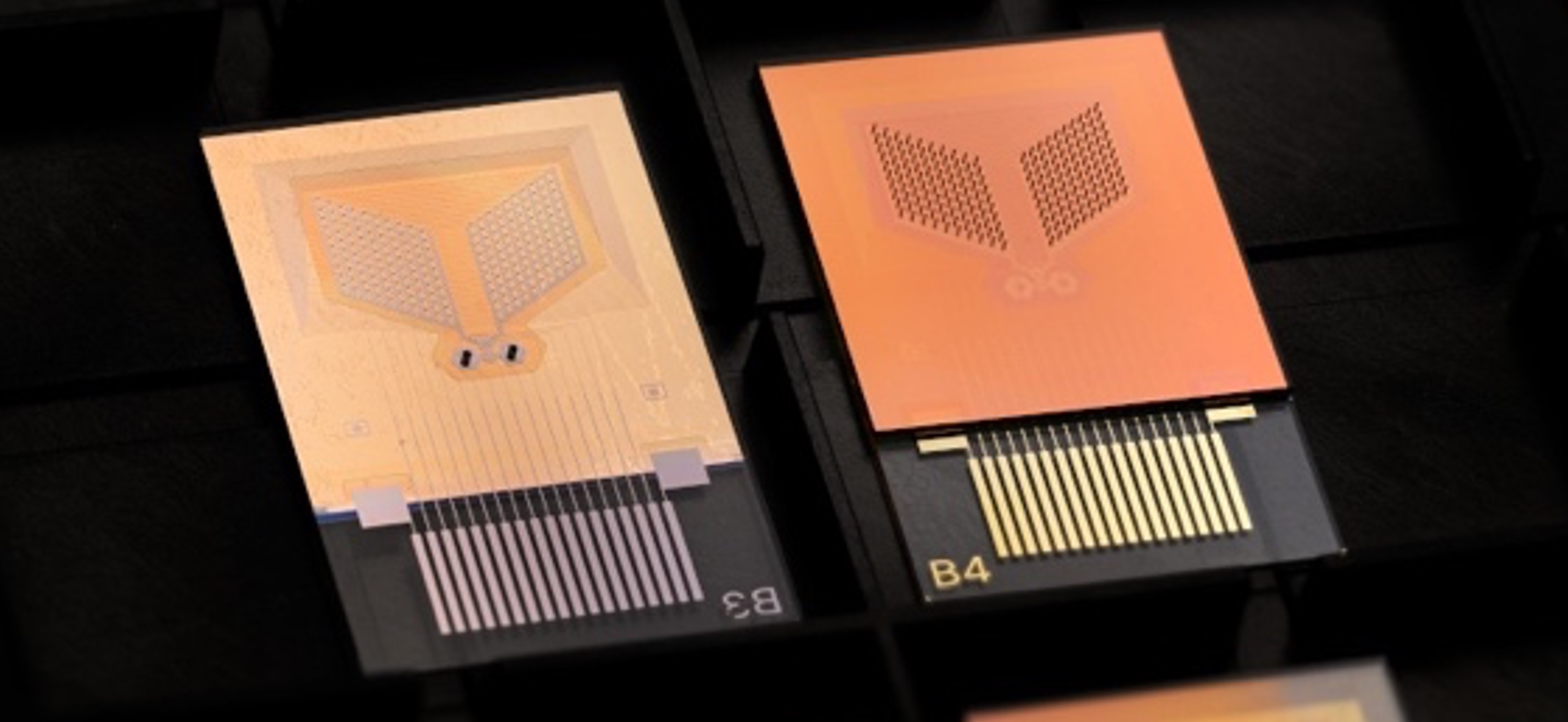
Figure 1: Photograph of the BEA2 Chip. The chip is connected to actuation and control hardware.
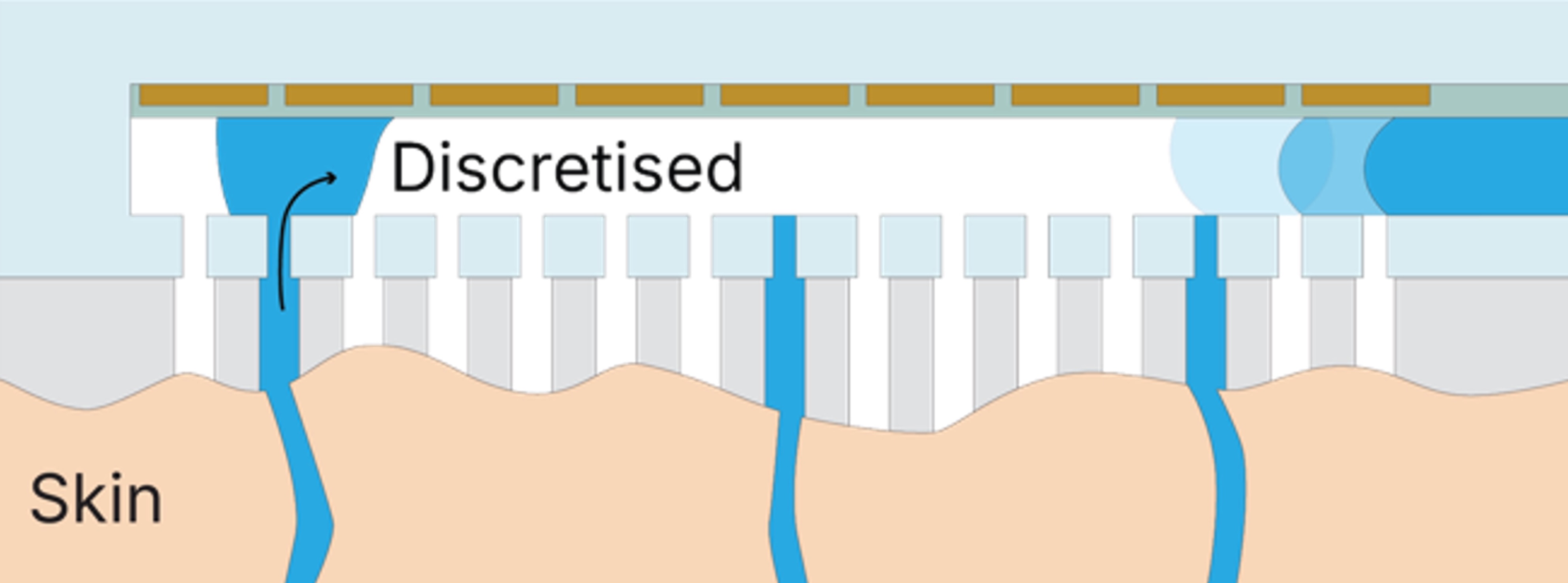
Figure 2: Discretised microfluidics concept. Droplets with a volume of ±1 nL are collected and transported via electrowetting-on-dielectrics to the middle of the device where the biosensor is placed.
Project description
The aim of this project is to evaluate and select suitable creatinine sensors for integration into the BEA platform. The student will first define the functional and technical requirements for creatinine sensing in sweat, such as sensitivity, selectivity, stability, response time, and compatibility with wearable systems. This will be followed by a literature study on creatinine sensors reported in scientific research, as well as an overview of commercially available sensors. Based on this evaluation, one or more promising sensor concepts will be selected. Finally, the student will perform practical work, which may include experimental evaluation, comparison of sensor performance, and initial integration or testing within the BEA platform.
References
[1] E.J.M. Moonen, W. Verberne, E. Pelssers, J. Heikenfeld, J.M.J. Den Toonder, Lab on a Chip 2024, 24, 24 5304.